Understanding the Skin Barrier
The Protective Layer Behind Every Healthy Coat
Category: Skin Science
Reading Time: 12–15 minutes
Suitable For: Professional Groomers • Veterinary Professionals • Breeders • Exhibitors • Pet Owners
The skin barrier is the body's natural protective shield. It helps retain moisture, supports the skin's normal defence against environmental challenges, and provides the foundation for healthy-looking skin and coat. Understanding how the skin barrier functions allows professional groomers to make more informed decisions about bathing, conditioning and product selection.
Key Takeaways
-
The skin barrier is the outermost protective layer of the skin.
-
A healthy barrier helps retain moisture while protecting against environmental stressors.
-
Grooming products and techniques can support the cosmetic condition of the skin barrier.
-
Over-cleansing, harsh products or inappropriate routines may affect skin comfort and coat quality.
-
Professional grooming should work with the skin—not against it.
Every day, a dog or cat's skin performs an extraordinary task.
Without us ever noticing, it acts as a sophisticated protective shield, helping to retain moisture, support normal skin function and provide a barrier between the body and the outside world.
This remarkable structure is known as the skin barrier.
Although it is only a tiny fraction of a millimetre thick, the skin barrier influences almost everything professional groomers see in the salon from coat shine and manageability to skin comfort and overall cosmetic appearance.
When this barrier is functioning well, skin is better able to maintain its natural balance, and the coat often reflects that with improved texture, softness and condition.
When it is compromised, the signs may include dryness, dullness, excess oiliness or reduced coat quality, Understanding the skin barrier changes the way we think about grooming, it reminds us that every bath is more than a cosmetic service.
It is an opportunity to work in harmony with one of the body's most important protective systems.
What Is the Skin Barrier?
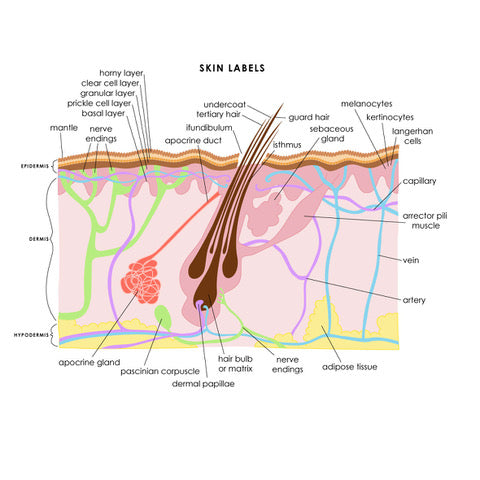
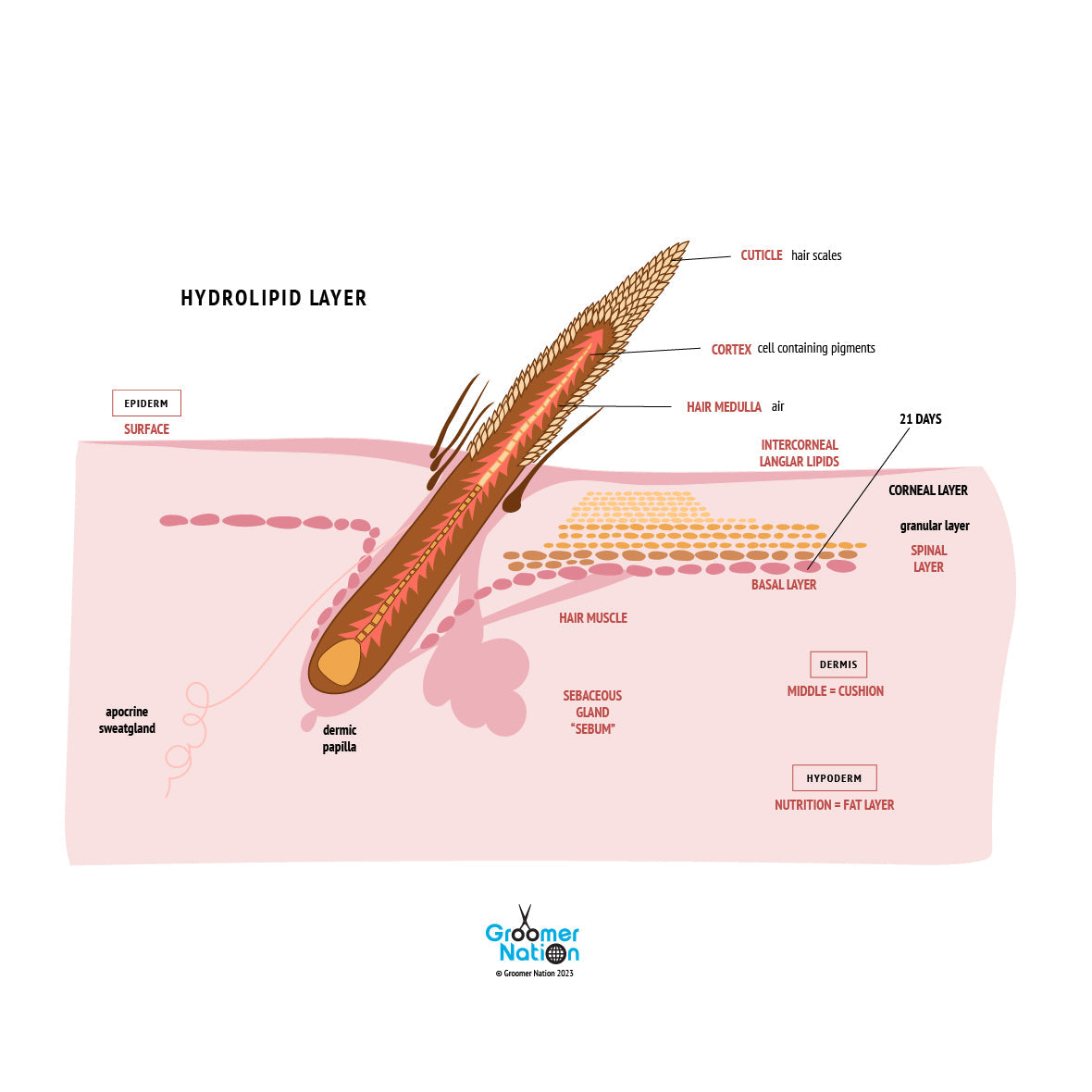
The skin is made up of several layers, but the barrier we are referring to sits within the outermost layer of the skin the epidermis, particularly the stratum corneum.
This layer is often compared to a brick wall, it's one of the simplest ways to understand how the skin barrier works, imagine a wall built from bricks and mortar.
The bricks represent flattened, dead skin cells called corneocytes, these cells are strong and provide physical protection. The mortar between the bricks is made up of specialised skin lipids primarily ceramides, cholesterol and free fatty acids.
Together they form a flexible seal that helps hold the wall together, if the mortar begins to deteriorate, gaps develop, moisture escapes more easily, the skin becomes less efficient at protecting itself from the outside environment.
Although this "brick and mortar" analogy is simple, it captures one of the most important principles in skin biology, healthy skin isn't just about the cells, it's also about the structures that hold those cells together.
More Than a Physical Barrier:
The skin barrier performs many essential functions simultaneously.
It helps:
-
Reduce water loss from the skin.
-
Support normal skin hydration.
-
Provide a physical barrier against environmental contaminants.
-
Contribute to the skin's natural defence systems.
-
Support overall skin comfort.
-
Create an environment that supports healthy-looking hair growth.
Professional groomers may not see these processes happening, but they see the results every day, a well-maintained skin barrier often supports coats that feel softer, appear shinier and are easier to manage.
What Can Affect the Skin Barrier?
The skin barrier is dynamic. It is constantly renewing itself and responding to the animal's environment.
Many factors can influence its condition, including:
-
Frequent swimming or exposure to water.
-
Environmental conditions such as heat, wind or low humidity.
-
Grooming practices.
-
Product selection.
-
Nutrition.
-
Age.
-
Individual skin characteristics.
-
Underlying medical conditions (which should always be assessed by a veterinarian).
As groomers, our role is not to diagnose skin disease, but we do have the opportunity to support the cosmetic condition of the skin and coat through appropriate product selection and grooming techniques.
Professional Tip
The coat is often the messenger - but the skin tells the story.
Rather than choosing products based solely on coat appearance, begin every grooming routine by assessing the condition of the skin and the characteristics of the coat together.
This simple shift in thinking can transform the way grooming routines are selected.
How Iv San Bernard Applies This Science
At Iv San Bernard, product systems are designed around the principle that different skin and coat types have different cosmetic needs.
Rather than relying on a single universal shampoo, routines are selected according to the individual animal's skin and coat characteristics.
For example:
-
Mineral Red System is commonly selected when the cosmetic goal is to support hydration and improve the appearance of dry, stressed skin and coat.
-
pH Balance Conditioner is frequently incorporated into professional routines to complement cleansing and help leave the coat feeling soft, manageable and balanced after bathing.
-
Orange PEK is often used where coat elasticity, resilience and manageability are priorities.
-
Black Passion may be chosen for coat types requiring enhanced softness, nourishment and cosmetic conditioning.
These routines are not about masking problems, they are about respecting the biology of the skin while achieving beautiful cosmetic results.
Frequently Asked Questions
Can grooming products repair the skin barrier?
Cosmetic grooming products are designed to cleanse, condition and improve the appearance and feel of the skin and coat. If a pet has persistent skin concerns, signs of discomfort or suspected disease, veterinary assessment is essential.
Can bathing too often damage the skin barrier?
Frequency alone is not the deciding factor. Appropriate product selection, correct dilution, conditioning and gentle grooming techniques all play important roles in maintaining the cosmetic condition of the skin and coat.
Why is conditioner important?
Conditioners help put back what shampoo removes, hydrating the skin and the hair resulting in coat manageability. In professional grooming routines, they are often selected according to the coat's individual needs rather than used as a one-size-fits-all product.
References
-
BSAVA Manual of Canine and Feline Dermatology
-
Muller & Kirk's Small Animal Dermatology
-
ICADA (International Committee on Allergic Diseases of Animals) consensus statements
-
Peer-reviewed veterinary dermatology literature on epidermal barrier function
-
Cosmetic science texts on the stratum corneum and barrier biology