Understanding Hair Structure
From Hair Follicle to Hair Fibre
Category: Coat Science
Reading Time: 14–16 minutes
Suitable For: Professional Groomers • Veterinary Professionals • Breeders • Exhibitors • Pet Owners
"Every grooming technique acts on the hair fibre. Understanding its structure explains why coats respond differently to brushing, bathing and styling."
Quick Summary
Hair is a specialised biological structure composed primarily of keratin. While hair is produced by living cells within the follicle, the visible hair shaft is non-living tissue. Its structure influences strength, flexibility, texture and cosmetic appearance. Understanding hair anatomy provides the foundation for making informed grooming decisions.
Key Takeaways
-
Hair develops within the hair follicle before emerging through the skin.
-
The visible hair shaft is composed of dead, keratinised cells.
-
Hair consists of three structural regions: the cuticle, cortex and, in some hairs, the medulla.
-
The cuticle plays an important role in protecting the hair fibre.
-
Hair structure influences grooming performance, cosmetic finish and coat management.
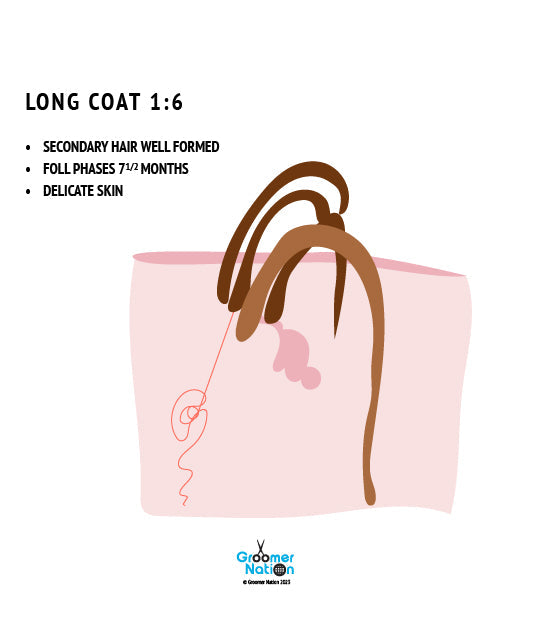
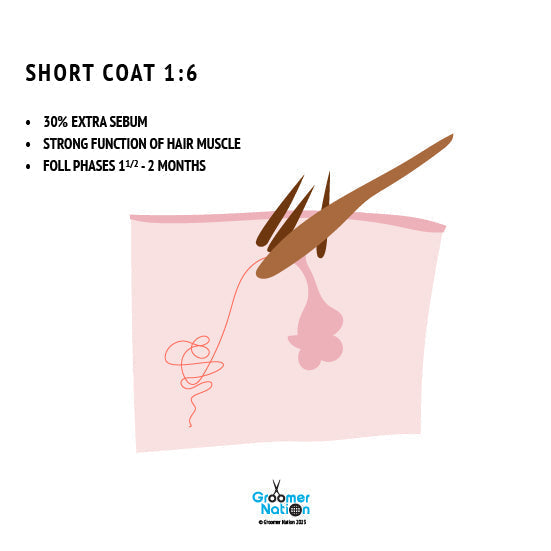
Hair Begins Beneath the Skin, hair originates within the hair follicle, a complex structure located within the dermis, at the base of the follicle is the hair bulb, where actively dividing cells produce the growing hair shaft.
These cells gradually move upward through the follicle, becoming increasingly filled with keratin before losing their nuclei and other cellular components, by the time the hair emerges from the surface of the skin, it has become a non-living fibre.
Although biologically inactive, the hair shaft retains remarkable mechanical strength due to its highly organised protein structure.
Hair Growth Is a Biological Process
Hair growth occurs only within the follicle.
Once hair emerges above the skin surface:
-
It no longer contains living cells.
-
It has no blood supply.
-
It cannot repair itself following physical damage.
Cosmetic grooming products improve the appearance and handling characteristics of the hair fibre but do not regenerate damaged hair tissue.
The Three Main Layers of the Hair Shaft
Although individual hair types vary, most mammalian hair shafts contain three structural regions.
1. Cuticle
The cuticle forms the outer surface of the hair. It consists of overlapping layers of flattened cells arranged similarly to roof tiles. Its primary role is protection.
A healthy cuticle helps shield the underlying cortex from physical and environmental damage while influencing shine and surface smoothness. Because grooming tools interact directly with the cuticle, preserving its condition is an important aspect of coat care.
2. Cortex
The cortex forms the majority of the hair fibre.
It contains densely packed keratin proteins and is responsible for many of the hair's mechanical properties, including:
-
Strength
-
Flexibility
-
Elasticity
-
Diameter
-
Natural colour (through pigment granules)
The cortex largely determines how the hair behaves during grooming.
3. Medulla
Some hairs contain a central core called the medulla. The medulla varies considerably between species, breeds and even different hair types on the same animal.
Its exact biological function is still not fully understood, although it may contribute to insulation and structural characteristics in some coat types. Not every hair contains a well-developed medulla.
Microscopic examination shows considerable variation in hair structure between breeds and even within the same coat. Guard hairs, awn hairs and undercoat fibres differ in diameter, medullation and surface characteristics, reflecting their specialised functions within the coat.
Most dogs do not have a coat made of identical hairs, instead, several hair types often work together.
These may include:
-
Primary (guard) hairs, which provide protection and contribute to the coat's overall appearance.
-
Secondary (undercoat) hairs, which provide insulation.
-
Intermediate or awn hairs, which have characteristics between guard hairs and undercoat.
The proportion of these hair types varies significantly between breeds, contributing to the diversity of coat textures encountered in professional grooming.
Double-coated breeds may contain thousands of fine secondary hairs for every square centimetre of skin, creating exceptional insulation while requiring specialised grooming techniques during seasonal shedding.
Why Hair Structure Matters to Groomers
Professional grooming involves applying mechanical forces to the hair fibre.
A groomer who understands hair anatomy is better equipped to:
-
Select appropriate grooming techniques.
-
Choose suitable tools.
-
Understand differences between coat types.
-
Prepare coats effectively before styling.
-
Reduce unnecessary mechanical damage.
Rather than treating all coats identically, professional grooming adapts to the biological characteristics of the hair being worked on.
Hair Structure Influences Cosmetic Performance
Although the biological structure of hair cannot be changed once it has formed, its cosmetic performance can be influenced by professional grooming.
Surface conditioning can improve:
-
Combability.
-
Surface smoothness.
-
Shine.
-
Manageability.
These changes occur through interactions with the hair fibre rather than by altering its biological structure.
Recognising this distinction allows groomers to communicate accurately with clients while maintaining evidence-based practice.
Different coat types should not be expected to behave the same way. When assessing a coat, consider both the biological structure of the hair and the cosmetic finish you wish to achieve before selecting products or grooming techniques.
Frequently Asked Questions
Is hair living tissue?
Hair is produced by living cells within the follicle. Once the hair shaft emerges above the skin surface, it consists of non-living keratinised cells.
Can damaged hair repair itself?
No. Hair fibres do not regenerate after physical damage. Cosmetic products can improve the appearance and handling characteristics of the hair but do not restore living tissue.
Why do different breeds have different coat textures?
Coat texture is influenced by genetics, including differences in follicle structure, hair diameter, growth patterns and the relative proportions of guard hairs, undercoat and intermediate hairs.